Gouda Collection

Thursday, November 30, 2006

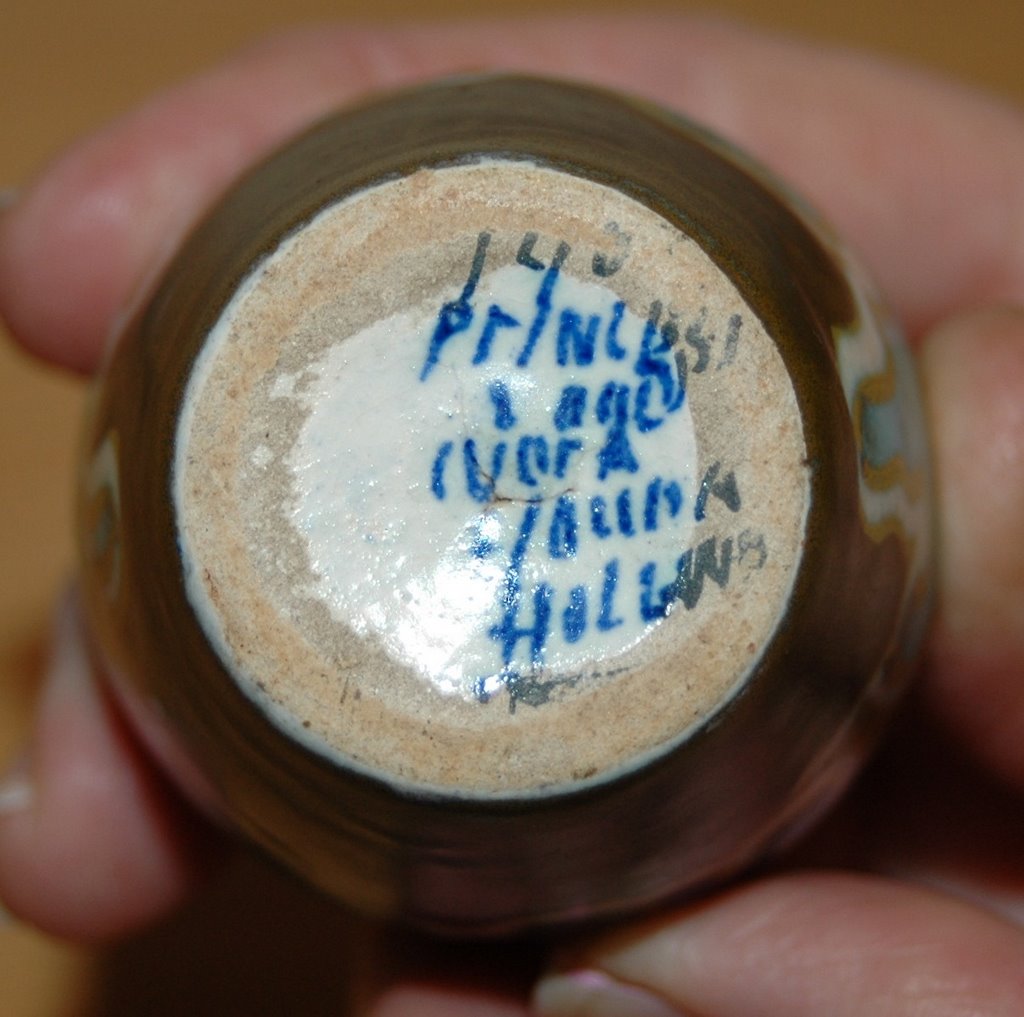
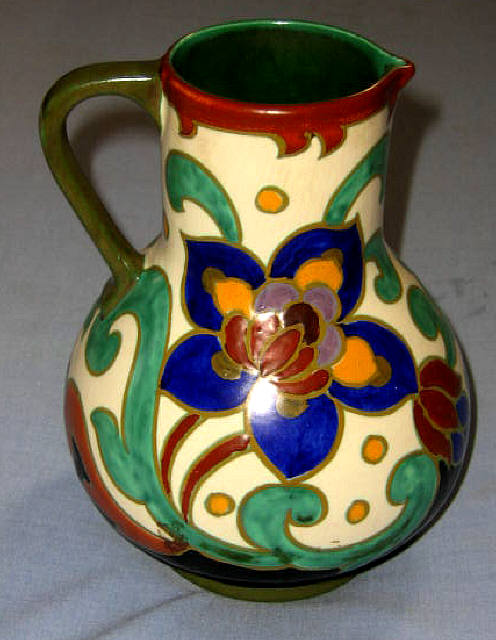
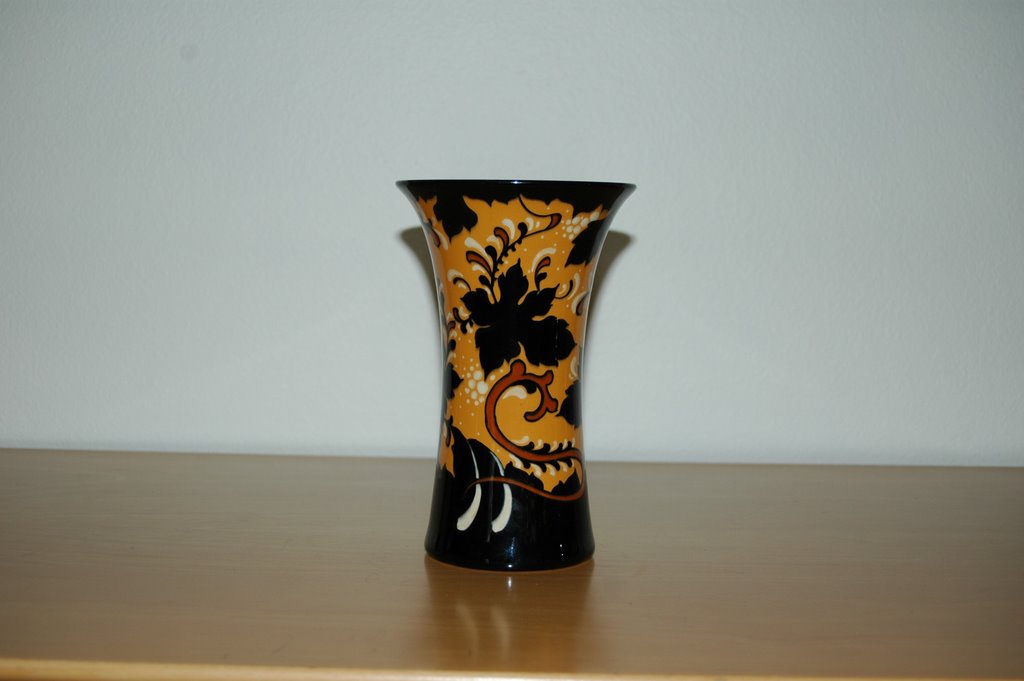
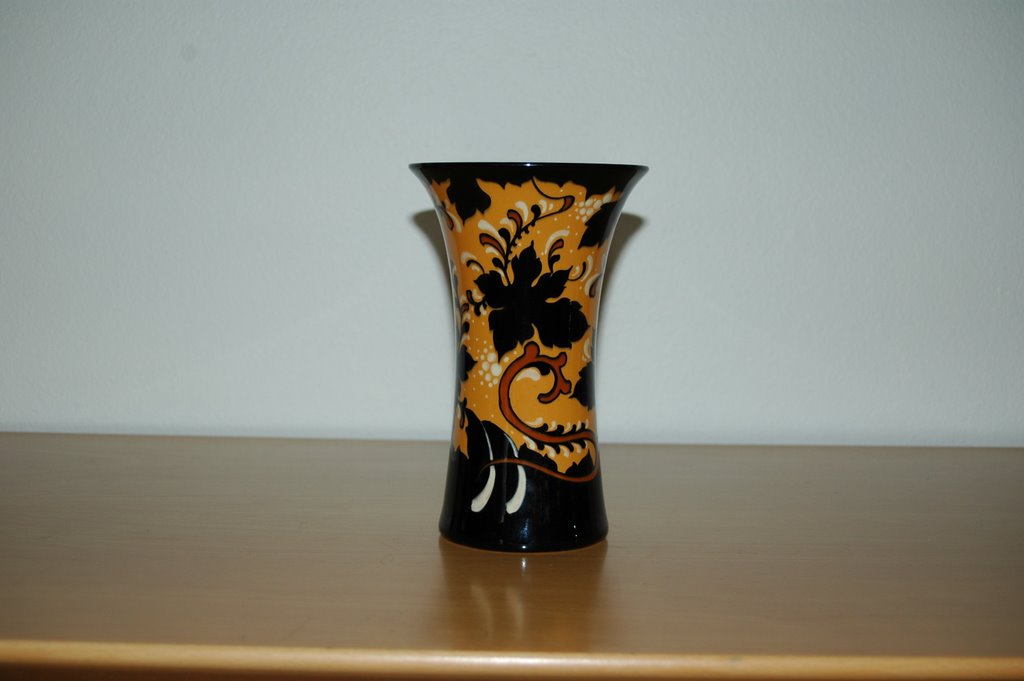
GOUDA, HOLLAND, IVORA, "PRINCESS" PATTERN VASE
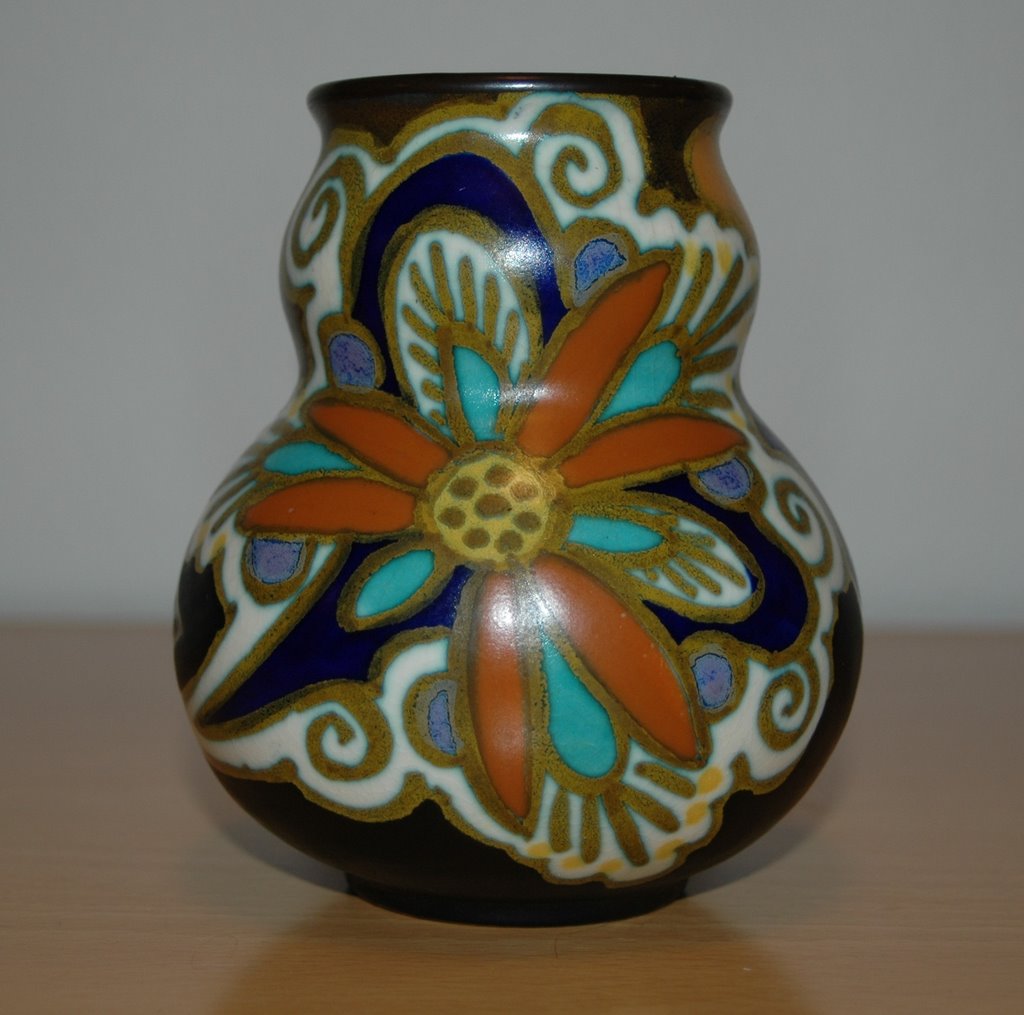
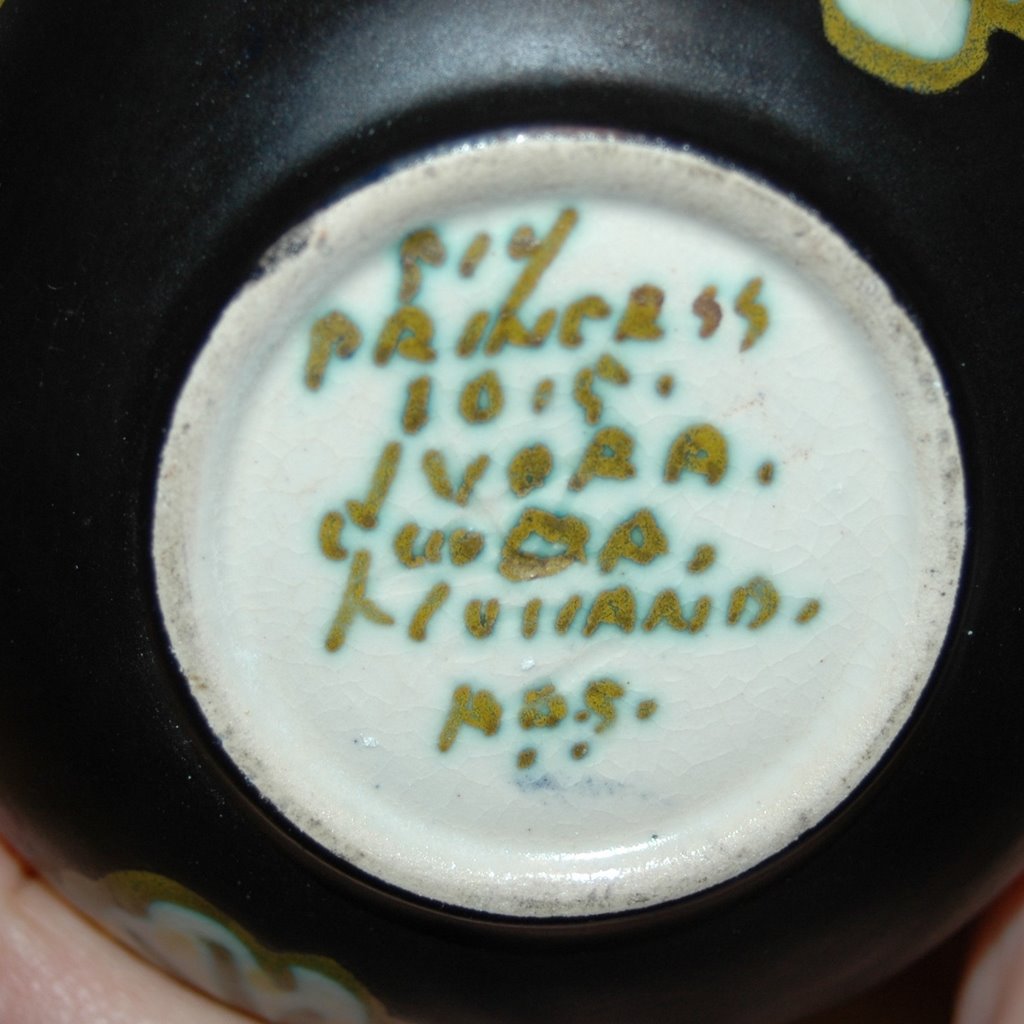
This colorful recurved vase has a fantasy floral design and dates to 1925-1926 when the Ivora factory did not have enough production capacity to do its own manufacturing. The PZH factory was commissioned to manufacture the pieces which were all named the "Princess" pattern. The decorator's initials are not clear, perhaps "H.O.S".
Labels: , , , ,

Friday, November 24, 2006

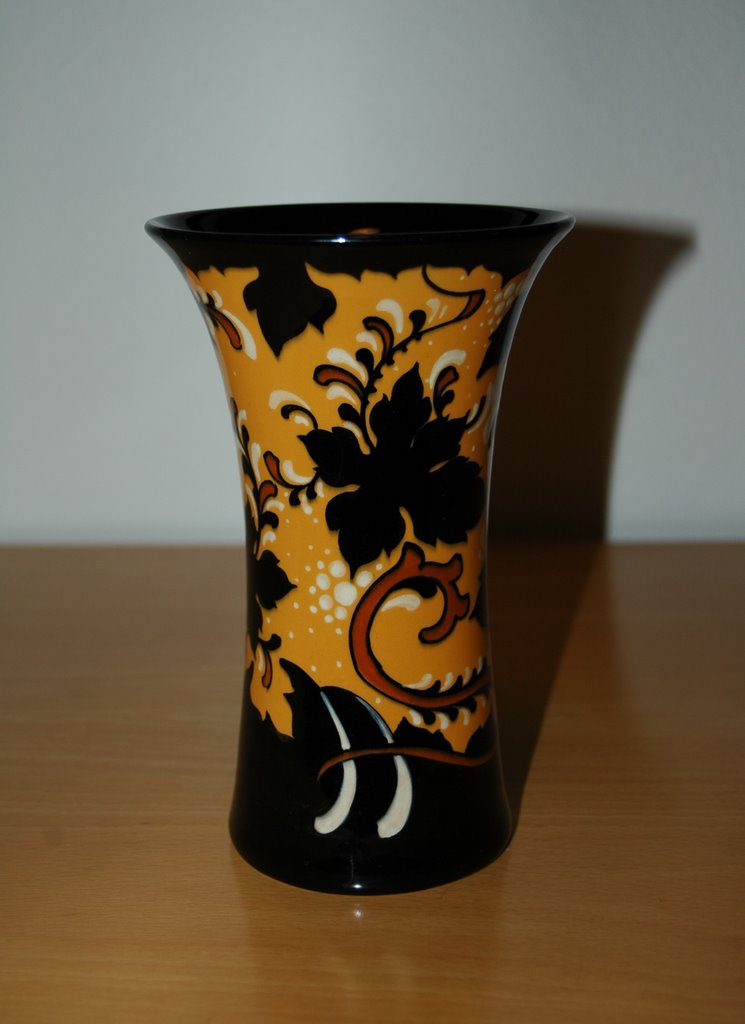
GOUDA, HOLLAND, REGINA, "ROBUR" PATTERN


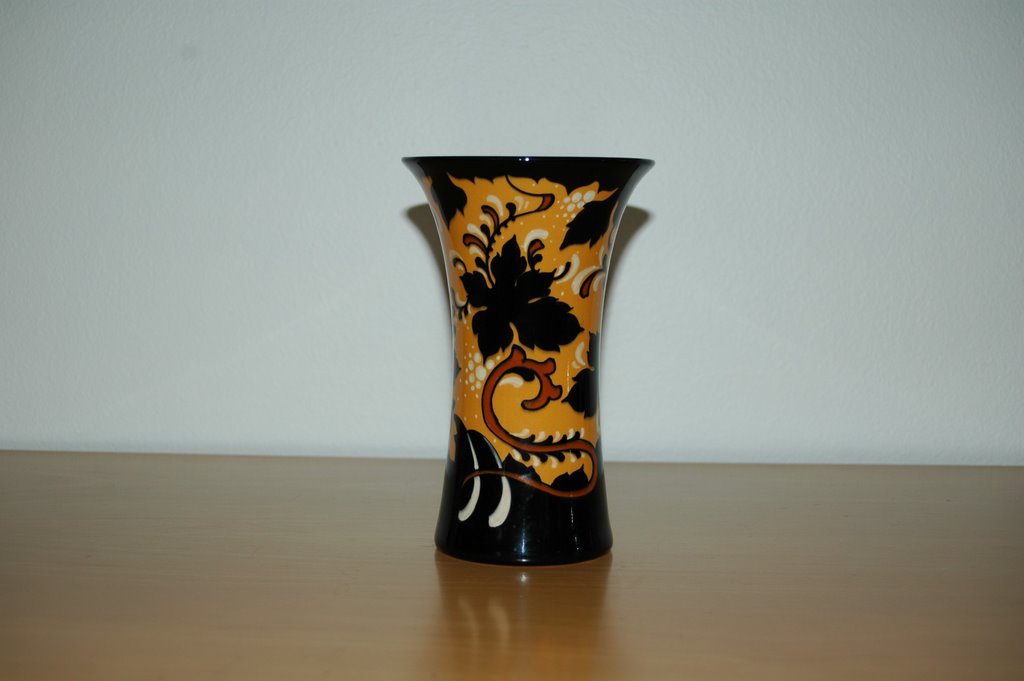
This lovely high-glazed Regina trumpet vase dates to c. 1920. Its pattern name is Robur. In the early years at the Regina factory the glossy patterns were very popular. Most of them were formed in the old Rozenburg moulds but Regina also had their own. Famous old glossy patterns are "Cordoba", "Robur", "Olga" and the "Uni" pattern of which "Robur" and "Olga" were produced for the Australian and South American market. These patterns were not interesting enough for the European market. Patterns "Olga" and "Robur" were probably inspired by the designs of T.A.C. Colenbrander, who worked at the Rozenburg factory and later at the Zuid-Holland factory.


Labels: , , , ,

Thursday, November 23, 2006

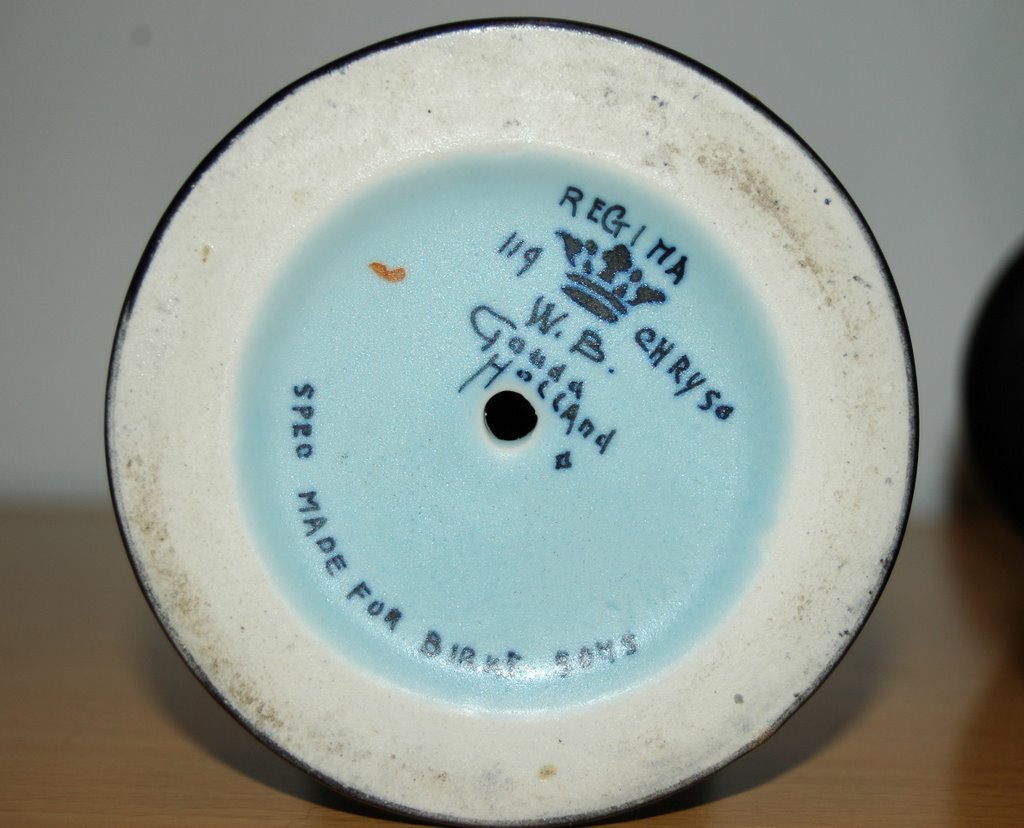
GOUDA, HOLLAND, REGINA, "CHRYSO" PATTERN

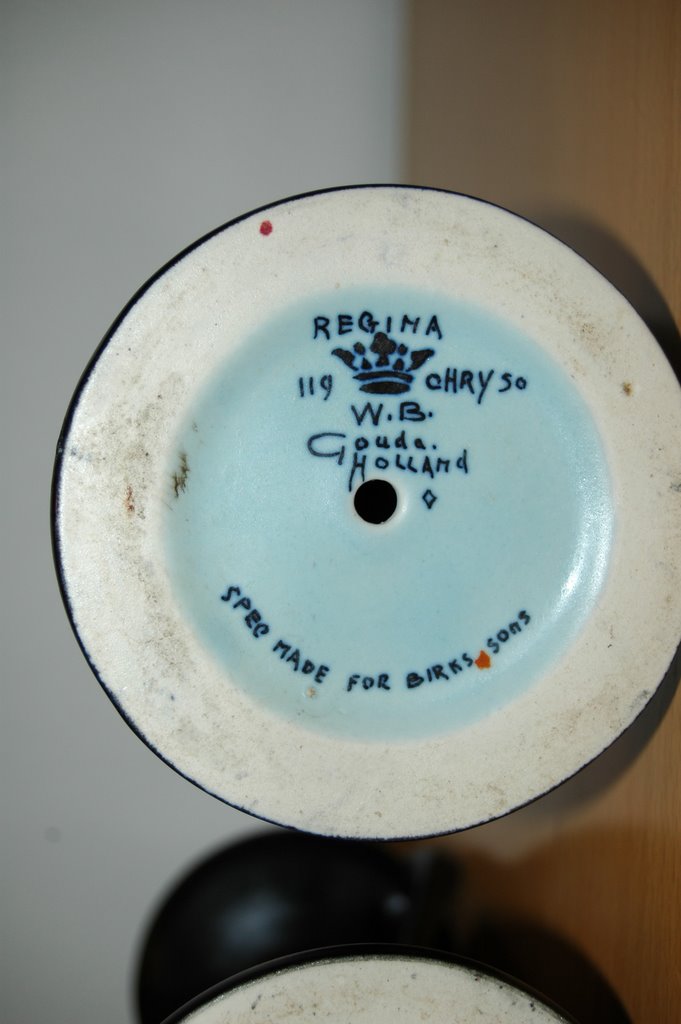
These colorful candlesticks were made by the Regina factory for export to the Canadian retailer Ryrie Birks Ltd. The production period at Regina for these matte pieces is 1920-1930. The pattern name is Chryso.

Labels: , , , ,

GOUDA, HOLLAND, AMPHORA, "POMPEA" PATTERN

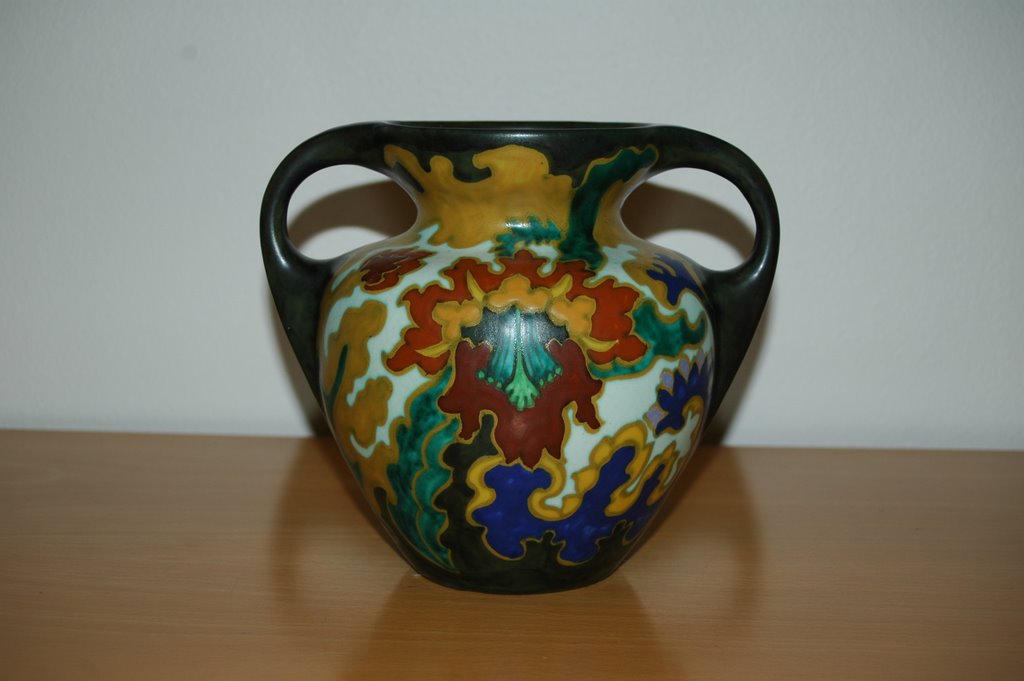
This two-handled vase with the wonderful fantasy floral design was produced by the fayence factory Amphora in Oegstgeest. The production period is 1908-1927. Its pattern name is Pompea. The model number is M68.

Labels: , , , ,

Saturday, November 04, 2006

GOUDA, HOLLAND, PZH, "VERINIQUE" PATTERN

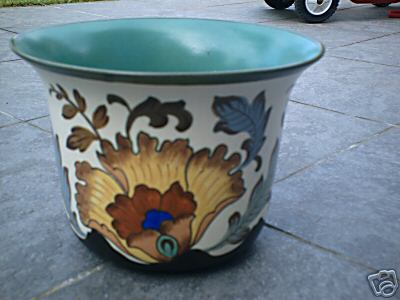
A fine example of relatively late production at the PZH factory, this large flowerpot has a very pleasing color scheme. Its decor name is "Verinique". It dates to the production period 1935-1950.

Labels: , , , ,

GOUDA, HOLLAND, IVORA, "PRINCESS" PATTERN


A salesman's sample, or "bibelot", this petite and colorful vase was made by the Ivora factory during the period 1925- 1926. Because the Ivora factory lacked the production capacity, this and other "Princess" pieces were made by the PZH factory on commission.

Labels: , , , ,

GOUDA, HOLLAND, PZH, "PICO" PATTERN


This fabulous floral fantasy design vase was created by PZH in 1929. Its decor name is "Pico". The decorator's initials are "CT" (unknown).

Labels: , , , ,

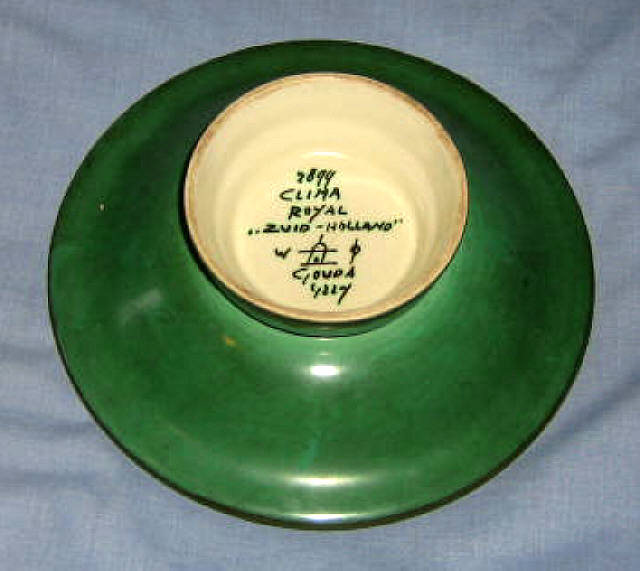
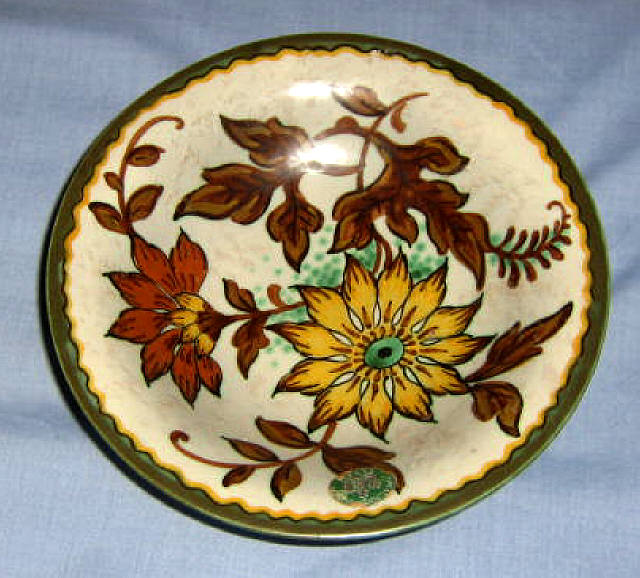
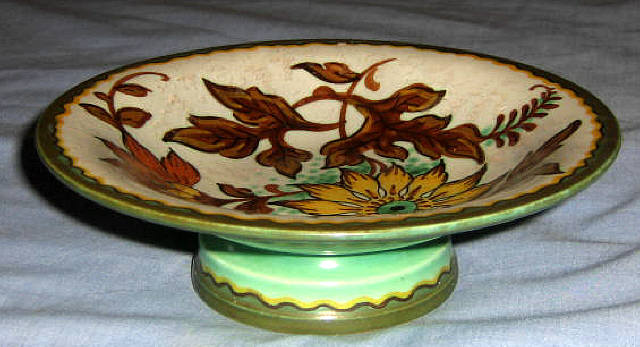
GOUDA, HOLLAND, PZH, "CLIMA" PATTERN

This is a beautiful autumnal pattern made by PZH in 1949. Its decor name is "Clima". It was painted by W.


Labels: , , , ,

GOUDA, HOLLAND, PZH, "LYA" PATTERN


This lovely floral ewer/jug was created by the PZH factory in 1953. Its decor name is "Lya". The painter was W.

Labels: , , , ,

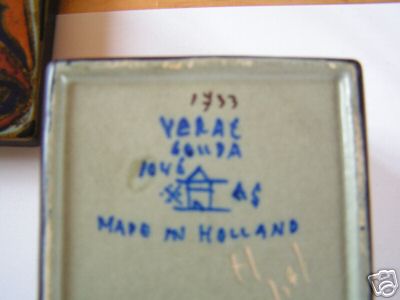
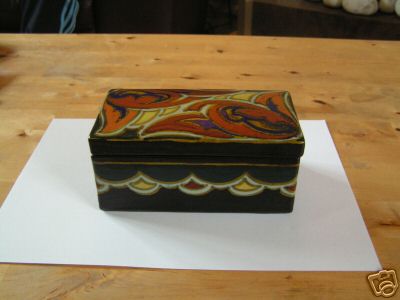
GOUDA, HOLLAND, PZH, "YERAT" PATTERN

This rare PZH trinket box is brightly painted and bears the decor name "Yerat". It dates to c. 1927. It may have been painted by Johanna Maria Sluis (initials A.S).

Labels: , , , ,

GOUDA, HOLLAND, PZH, "YSSEL" PATTERN


This large PZH pitcher was painted in March 1919. Its decor name is "Yssel". It was painted by an unknown decorator.

Labels: , , , ,

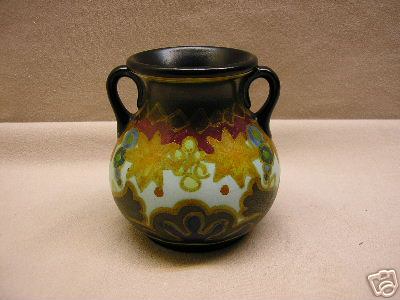
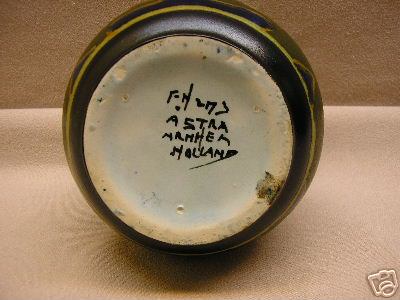
GOUDA, HOLLAND, ARNHEM, "ASTRA" PATTERN


This elegant and colorful two-handled vase was made at the Arnhem factory c. 1920-1926. Its decor name is "Astra" (star).

Labels: , , , ,

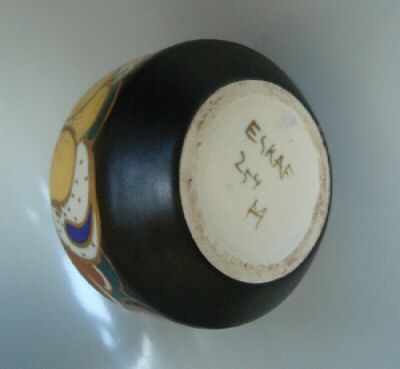
GOUDA, HOLLAND, ESKAF


This colorful pitcher was made at the ESKAF factory (Eerste Steenwijker Kunst-Aardewerk Fabriek). In 1919 the ESKAF factory was founded by Hillebrand Ras and Hein Krop in the town of Steenwijk, Overijssel. The factory was in use from 1919 until 1927. Only a few ESKAF decors had pattern names. The popular "Gouda bloemdecors" were mainly designed by W.H van Norden. Norden was also a designer of other ESKAF decors together with W. Bogtman, J.H de Groot, P. van Stam and many others. This vase, in one of the "Gouda bloemdecors", was painted by HM or HW (see initials).

Labels: , , , ,

Thursday, November 02, 2006

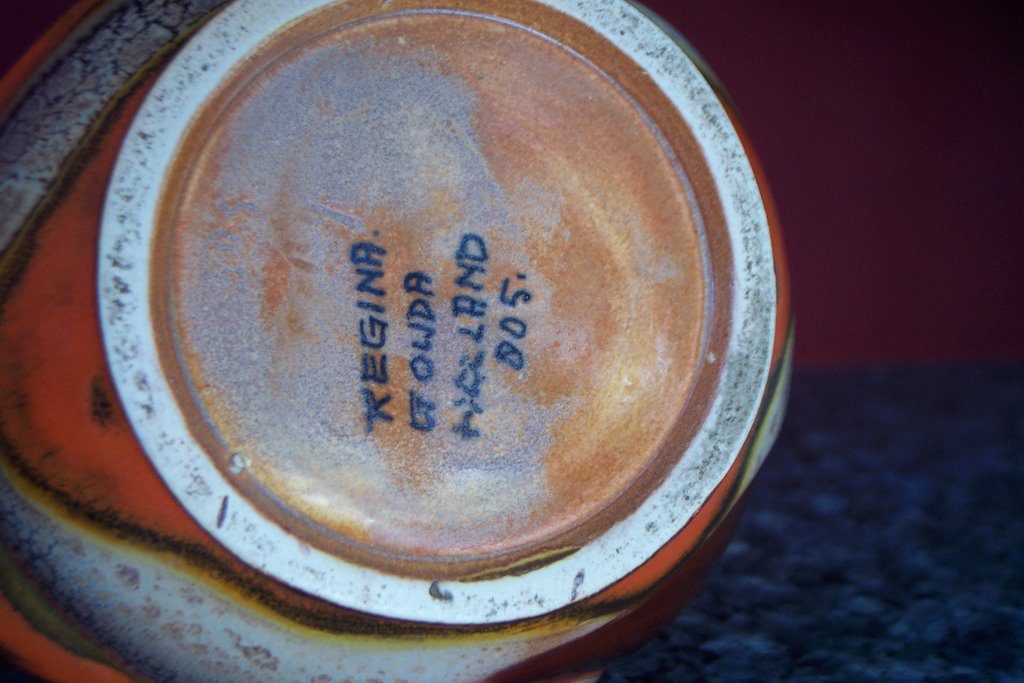
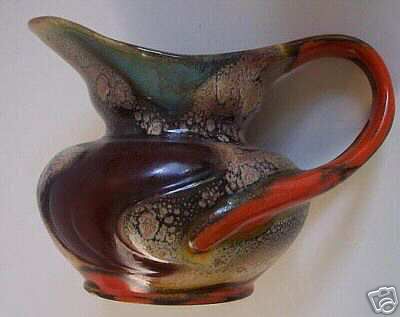
GOUDA, HOLLAND, REGINA, CRISIS WARE

This large Regina pitcher is an example of the type of pottery that grew out of the strikes by Gouda decorators in 1928-1929. The strikes led to the loss of many workers in the early 1930's and to the development of a new style of painting that required less labor and artistry. The style became known as "Crises aardewerk", which means crisis or depression pottery. The method consisted of the layering of different colored glazes. The results were somewhat unpredictable since no one could be certain how the colors would react with each other. The end result was that the products were very colorful and immediately recognizable as "Crisis" works.

Labels: , , , ,

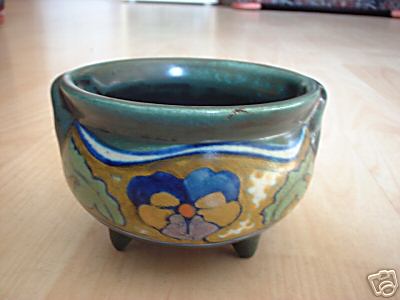
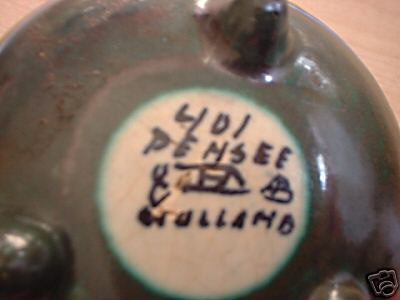
GOUDA, HOLLAND, PZH, "PENSEE" PATTERN

This small PZH cauldron dates to c. 1923 and is decorated with the "Pensee" (pansy) pattern. It has three small pointed feet. The painter is A. B. , possibly Arnoldus Theodorus de Boer.

Labels: , , , ,

Monday, October 30, 2006

GOUDA, HOLLAND, PZH, COLLIER PATTERN


This elegant vase with a delicate geometric pattern called "Collier" (necklace) was made by the PZH factory in 1924. The painter was J.vL (Johanna Cornellia van Leeuwen).

Labels: , , , ,

GOUDA, HOLLAND, ROZENBURG, UNKNOWN PATTERN


This exquisite Rozenburg cachepot or fruit bowl is an example of some of the earliest Gouda pottery. This piece was made in 1898, evidenced by the crown mark celebrating the coronation of Queen Wilhelmina. The square to the right of the stork on the base is an okay sign from the overseer of the painter, who is unknown.

Labels: , , , ,

Saturday, October 28, 2006

GOUDA, HOLLAND, IVORA, PRINCESS PATTERN

Labels: , , , ,

Thursday, October 26, 2006

GOUDA, HOLLAND, PZH "ROZENBURG" BUTTER PATS

When W.A. Hoyng became General Manager of the PZH factory in 1907, this had quite an impact on the development of new glazes and production techniques. Also the arrival of W.P. Hartgring from the Rozenburg factory and his direct input led to the New Porcelain line. The Rhodian technique was developed, and the Rozenburg-style thin line shading disappeared and was replaced by totally filled-in fields. Daniel Harkink finished this line with the development of a matte glazing and his Matte Vogel (MV) and Matte Bloemen (MB) designs. These four butter pats are a product of that turn-of-production period. The applied soft pastel tints on the white baking clay and the simplified but very stylish and elegant Art Nouveau pattern gives these items the special aura that is so significant for the years 1908-1910.


Labels: , , , ,

Sunday, October 15, 2006

GOUDA, HOLLAND, PZH "CROCUS" PATTERN

This colorful small bowl is decorated with PZH's "Crocus" pattern and dates to 1927. The decorator is unknown.


Labels: , , , ,